
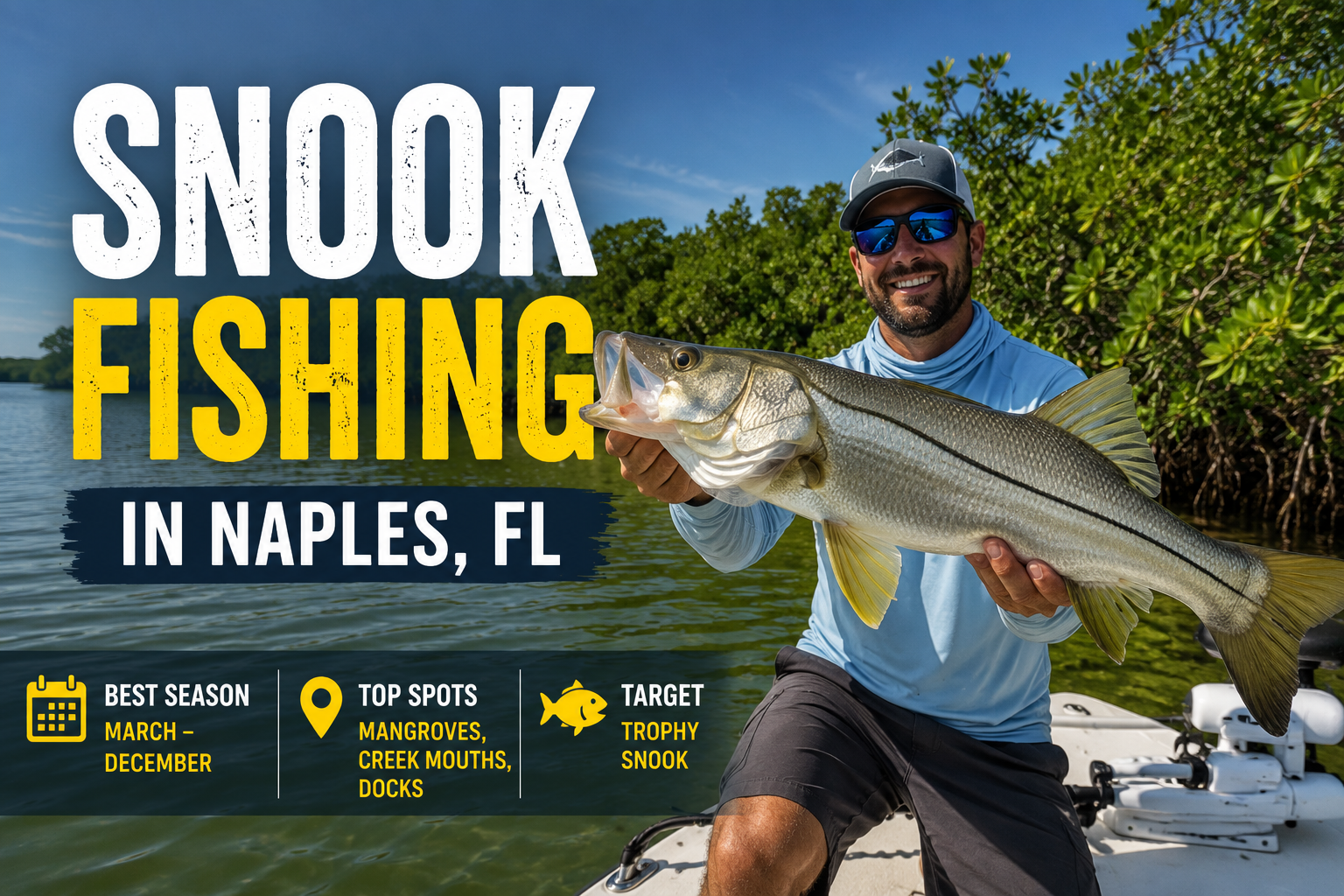
I get asked this question more than almost any other. Anglers show up wanting one thing above everything else, a shot at a big snook fishing in Naples trip, and I do not blame them. Snook fight hard, they are picky, and landing one still feels like an accomplishment even after guiding hundreds of trips. Below I am walking through exactly how I approach these trips, so you know what to expect before you ever step onto my boat.
Naples sits on top of some of the healthiest snook habitat in Southwest Florida. Mangrove shorelines, oyster bars, and backcountry creeks give these fish everywhere to ambush bait, and my job is knowing which of those spots is holding fish on any given morning. I have run this boat long enough to notice patterns most visiting anglers would never pick up on in a single trip.
Snook fishing in Naples, FL runs strong from March through December, with the sharpest bite typically in spring and again in fall. Water temperature drives everything. As the Gulf warms in spring, snook push out of their winter holes and start feeding aggressively along the mangroves. That same pattern repeats in fall as temperatures cool back down. Summer can still produce fish, but I usually adjust timing around dawn or dusk to avoid the hottest, slowest part of the day.
I keep a close eye on tides too. A moving tide, whether incoming or outgoing, pushes bait past ambush points and triggers strikes. Dead slack water tends to shut the bite down almost completely, so I plan trips around tide charts rather than just the clock.
My go to spots change with the season, but mangrove points, creek mouths, and dock pilings consistently produce. Bigger snook tend to hold tighter to structure, so accurate casting matters more than raw distance. I will position the boat so you can drop bait right along the shadow line under a dock or tuck a cast into a mangrove pocket most anglers would never attempt.
For a broader look at what else bites alongside snook throughout the year, check out the target species page, where I break down redfish, tarpon, and snapper seasons too.
Live bait wins more often than not. Pilchards and threadfin work well when I can net them fresh that morning, and shrimp is a reliable backup on slower days. For anglers who prefer artificials, soft plastic jerk baits and topwater plugs both produce, especially early in the morning before the sun gets high. I bring everything needed, so you never have to worry about showing up with the wrong gear.
If you are curious about the full range of trips I run, the four hour charter page covers pricing and what is included for a half day on the water.
I keep every trip private, capped at four guests, aboard my 20 foot Pathfinder. That means no waiting your turn and no crowding, just a boat built around your group. I handle bait, licensing, and gear, and I will coach you through casting technique if snook fishing is new to you. Most first timers are surprised by how hard these fish pull for their size, so be ready.
You can also read recent catch reports and see what has been biting lately on the fishing report page, which I update regularly based on what I am seeing on the water.
If you have been chasing that first big snook, or you are trying to beat a personal best, I would love to help make it happen. I plan every trip around current conditions rather than running the same route regardless of what the tide and bait are doing. Reach out through my contact page and let me know your dates, I will help you find the window that gives you the best shot at a trophy fish.
March through December is strongest, with spring and fall producing the most consistent, aggressive strikes along the mangroves.
No, I provide rods, reels, tackle, and bait for every trip, so you can show up ready to fish immediately.
Yes, I coach casting and technique throughout the trip, making it approachable even if you have never targeted snook before.
Legal slot fish typically run 28 to 33 inches, though larger fish outside the slot show up and get released.
Moving tides, incoming or outgoing, produce far more strikes than slack water, so I plan trip timing around tide charts.
One of Naples Friendliest charter Captains!!
Book your finest Naples, FL fishing trip with Anchor Charters Of Naples featuring Captain Brian Acevedo today. Join Captain Brian on an inshore, nearshore, and backcountry fishing along the waters of Naples
©2025 Anchor Charters Of Naples | Design & Developed By Digital Guider
 anchor_admin
  07/24/2026
 09/03/2026